Phone Number Verification Insights: 2915209004, 685119756, 910684059, 910780135, 681197425, 968191838, 944341070, 63030301999027, 654731470 & 946134900

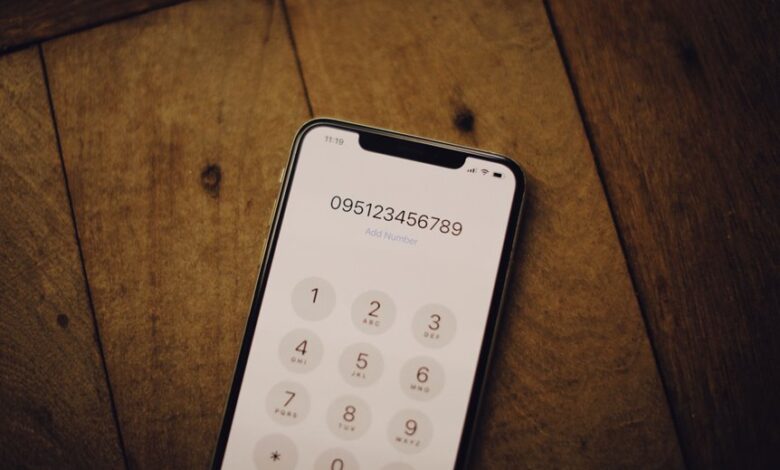
Phone number verification offers a fast trust signal, but its value depends on how data is used and protected. The listed numbers hint at varied origins, patterns, and network behaviors that can enable rapid authentication with limited exposure. Yet trade-offs exist between privacy, security, and user experience. Governance, risk controls, and transparent UX cues must balance speed with safeguards. This tension invites scrutiny of practical approaches and invites further examination of how these signals are deployed in real systems.
What Is the Value of a Verified Phone Number in 2026
A verified phone number holds strategic value in 2026 by establishing trust, accelerating authentication, and reducing fraud risks across digital services. It functions as a discreet credential, aligning privacy signals with user intent while preserving autonomy. Analysts observe how network patterns reinforce risk mitigation without exposing sensitive details, enabling safer onboarding, compliant verification, and informed freedom in consumer interactions and service choices.
How Identity Signals Emerge From Number Patterns and Networks
Number patterns and network behavior collectively illuminate identity signals, extending beyond static credentials to dynamic indicators of risk and intent.
The phenomenon highlights network emergence where aggregated signals—timing, frequency, and cross-channel traces—inform profiles without revealing sensitive data.
This approach supports privacy preserving, rapid verification, risk evaluation, and improved user experience while maintaining regulatory compliance and accountability.
Best Practices for Rapid, Privacy-Preserving Verification
Rapid, privacy-preserving verification requires a disciplined balance between speed and protection. Implementations should minimize data exposure, employ ephemeral tokens, and rely on client-side validation where possible. Centralized logs must log only essential events with strict access controls. Privacy preserving techniques, such as zero-knowledge proofs and reversible hashing, can support rapid verification while limiting footprint. Trade-offs must be documented, revisited, and audited. rapid verification.
Evaluating Risk, UX, and Compliance in Phone Verification
Evaluating risk, user experience (UX), and compliance in phone verification requires a structured assessment of threat models, usability trade-offs, and regulatory alignment. The analysis emphasizes identity signals integration, transparent decision logic, and consistent user feedback. A careful risk assessment balances friction against security, ensuring privacy safeguards and auditable processes while maintaining accessible, freedom-respecting flows across diverse contexts and jurisdictions.
Frequently Asked Questions
What Are Common Fraud Schemes Exploiting Verified Numbers in 2026?
Fraud schemes include SIM swapping, social engineering, and account takeover, exploiting verification gaps that allow unauthorized access. The analyst cautions that attackers exploit gaps in verification processes to bypass protections and impersonate legitimate users.
How Do Regional Carrier Policies Affect Verification Reliability?
Akin to a bygone dial tone, regional policies shape verification reliability through carrier verification practices, influencing delay, accuracy, and friction. Regional policies constrain processes, while carrier verification varies, requiring adaptable, privacy-respecting approaches for robust verification outcomes.
Can Verified Numbers Be Used for Multi-Factor Authentication Across Apps?
Verified numbers can support MFA integration across apps, but regional reliability, carrier policies, and SMS vulnerability require careful risk assessment, balancing security tradeoffs, fraud trend awareness, and cost-benefit with user friction and IP verification considerations.
What Are the Costs and ROI of Phone Verification for SMBS?
Phone verification costs vary; ROI depends on fraud reduction and conversion uplift. Implementation costs include integration, vetting carriers, and maintenance. In sum, careful budgeting reveals modest to compelling ROI for SMBs seeking risk reduction and trust.
How Do You Measure User Friction vs. Security Trade-Offs in Verification?
Friction vs. security are weighed by measurable UX impact and risk reduction; verification tradeoffs balance user ease with threat mitigation, prioritizing adaptive, transparent controls. The approach emphasizes data-driven thresholds, informed by context, feedback, and gradual enhancement.
Conclusion
In the quiet hum of authentication, a single digits-skyline signals trust without shouting. Verified numbers act as lanterns along a crowded threshold, guiding onboarding with minimal exposure. Yet shadows linger where data pools swell and routing grows complex. Governance must weigh speed against vigilance, UX against privacy, and jurisdiction against universality. When patterns glow clearly, users walk forward with autonomy; when fog thickens, safeguards must sharpen, ensuring accuracy, transparency, and humane discretion remain the compass.