Number Verification Archive and Caller Details Report: 63030301999024, 932206619, 932616060, 943223708, 14444, 693121231, 910714519, 600135207, 695687148 & 944580026

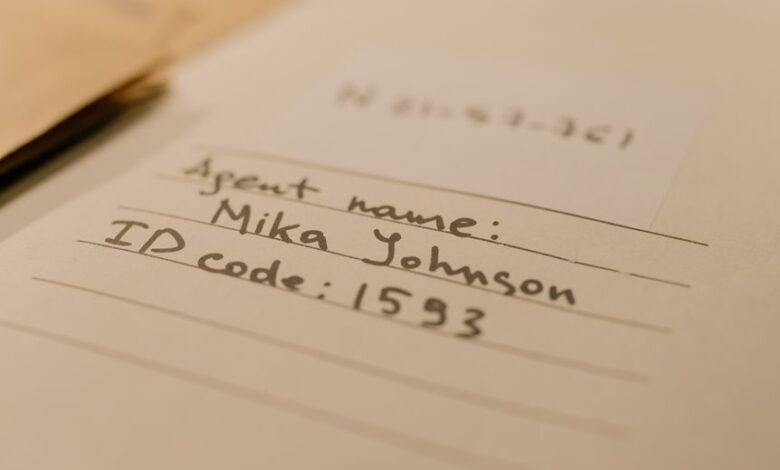
The Number Verification Archive and Caller Details Report consolidates validated numbers into a privacy-preserving, provenance-driven framework. It presents verified statuses, timestamped events, and anonymized identifiers to assess caller legitimacy and risk with minimal exposure of personal data. The approach emphasizes cross-checks of provenance and consistency, reinforcing data integrity while preserving privacy. This framework invites scrutiny of methods and results, offering a cautious path forward for informed conclusions, yet leaves a critical question unanswered as to next steps.
What Is the Number Verification Archive and Why It Matters
The Number Verification Archive is a centralized repository that records validated phone numbers and their associated verification events to support accurate caller identification, fraud assessment, and compliance reporting. It provides structured data for evaluating verification myths and assessing caller legitimacy while preserving privacy. Stakeholders seek transparency, consistency, and safety through standardized processes, clear provenance, and anonymization, reinforcing responsible freedom and trustworthy communications.
How to Read a Caller Details Report for the Listed IDs
A Caller Details Report organizes verified caller data by the IDs in scope, presenting structured fields such as verified status, timestamped events, source provenance, and anonymized identifiers to support rapid assessment of legitimacy, history, and risk.
How to read: each listed ID aligns with a single record, displaying core attributes, provenance, and privacy-preserving summaries to enable informed judgment about caller details.
Red Flags to Spot and Practical Verification Steps You Can Take Now
Red flags in a Caller Details Report emerge as patterns rather than isolated entries, guiding reviewers to suspicious timing, mismatched provenance, or inconsistent verification statuses.
The approach favors precise, anonymized assessment, highlighting red flags without exposing sensitive data.
Practical verification steps include cross-checking timestamps, validating source integrity, and documenting deviations, enabling compliant, freedom-minded analysis that reduces risk while preserving privacy and transparency.
Case-by-Case Breakdown: Patterns Behind the Numbers 63030301999024, 932206619, 932616060, 943223708, 14444, 693121231, 910714519, 600135207, 695687148 & 944580026
This section examines individual entries to reveal consistent patterns behind the numbers 63030301999024, 932206619, 932616060, 943223708, 14444, 693121231, 910714519, 600135207, 695687148, and 944580026.
The analysis emphasizes precision and anonymization, excluding irrelevant topic interpretations.
It highlights how unrelated concepts may mislead assessments, reinforcing disciplined verification while preserving user freedom and data integrity across cases.
Frequently Asked Questions
How Often Is the Archive Data Updated and Validated?
Archive data updates occur on a scheduled validation cadence, balancing data latency with accuracy. The system enforces strict compliance and anonymization standards, ensuring timely validation while preserving privacy and enabling controlled freedom in data access and use.
Are There Privacy Safeguards for Sensitive Caller Details?
Privacy safeguards exist through rigorous data governance, access controls, and anonymization. The system upholds data ownership principles, enforces compliance standards, and emphasizes deliberate, auditable handling to honor user freedom while protecting sensitive caller details.
Can Non-Listed IDS Be Added to the Report Dynamically?
Non listed additions cannot be added freely; safeguards require authorized channels. Dynamic updates may be permitted only through controlled, auditable processes, ensuring precision, compliance, and anonymization while preserving user autonomy and data privacy.
What Are the Data Source(S) and Reliability Metrics?
Data sources include anonymized telecom databases and public registries with traceability records; reliability metrics assess data accuracy, update cadence, and error rates, ensuring source traceability while preserving user privacy and compliance obligations for liberated access.
How Can Readers Request Corrections or Deletions of Entries?
Readers may submit Corrections requests to the archive custodians, followed by a formal Deletions procedure. The process emphasizes precision, compliance, and anonymization, ensuring privacy while honoring user autonomy and freedom in correcting or removing entries.
Conclusion
In a landscape of numbers and names, verification proves quiet precision while anonymization preserves privacy. Cross-checks illuminate provenance, yet shield identities, like footprints behind a glass wall. Clarity arrives through timestamps and status flags, revealing risk without revealing the subject. Patterns emerge, orderly and careful, as red flags flicker briefly in the periphery. The archive stands as a structured ledger: rigorous, compliant, and decidedly impersonal, balancing accountability with confidentiality in a measured, visual quietude.